Helping Multnomah County build a website the community would actually use
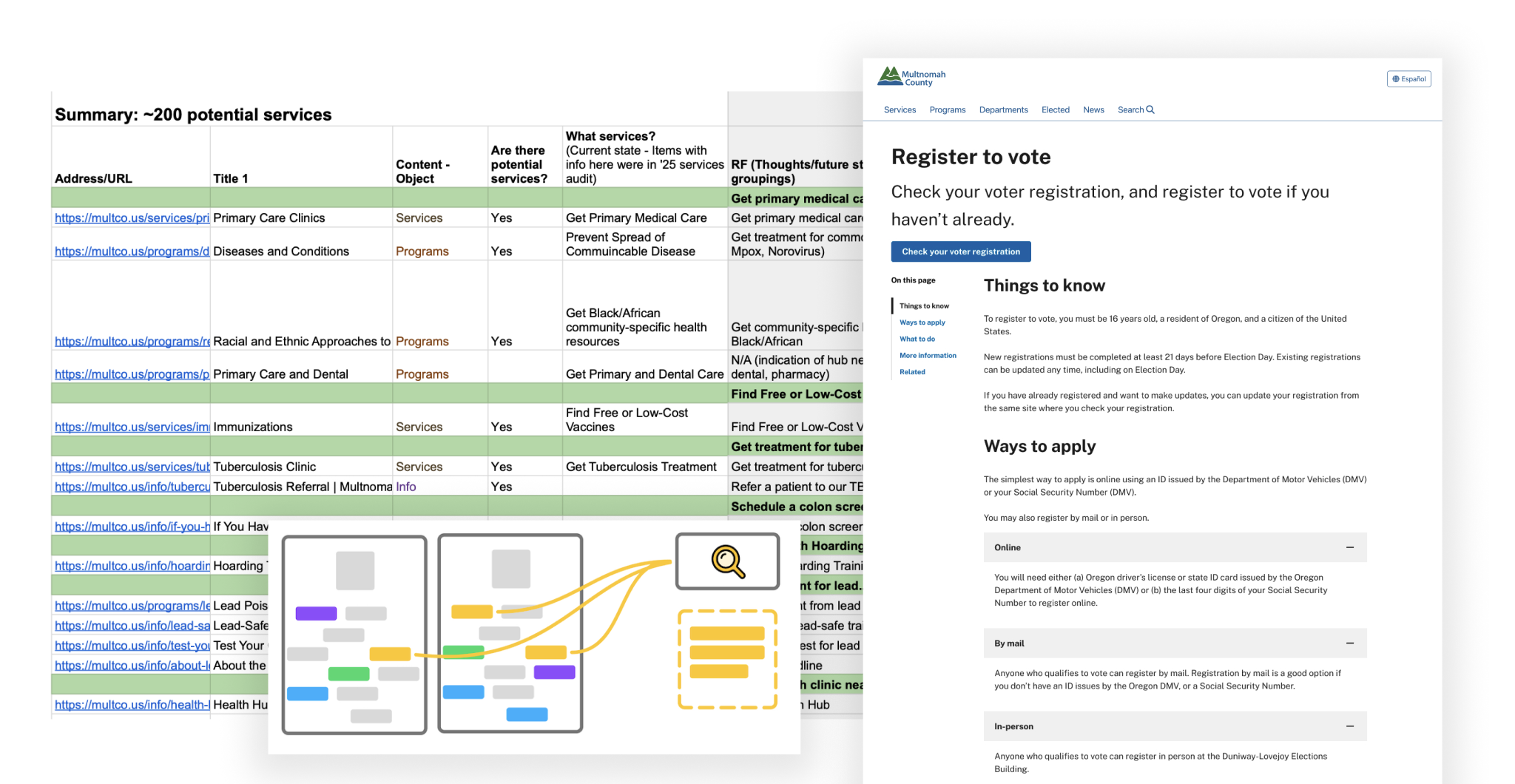
Multnomah County's website had grown into a 10,000-page reflection of the organization itself: structured around departments, internal logic, and policy categories. For the community members who needed it most, that structure was a barrier, not a resource.
The County knew it needed to move in a more human-centered direction. What it didn't have yet was a clear picture of what that meant, or a path to get there. Over the course of a year, I helped the team go from a broad mandate to a concrete, multi-year vision grounded in real community insight and built to hold up as digital expectations and technology continue to shift.
My role
Oversaw an external research agency conducting large-scale community engagement across hundreds of stakeholder touchpoints
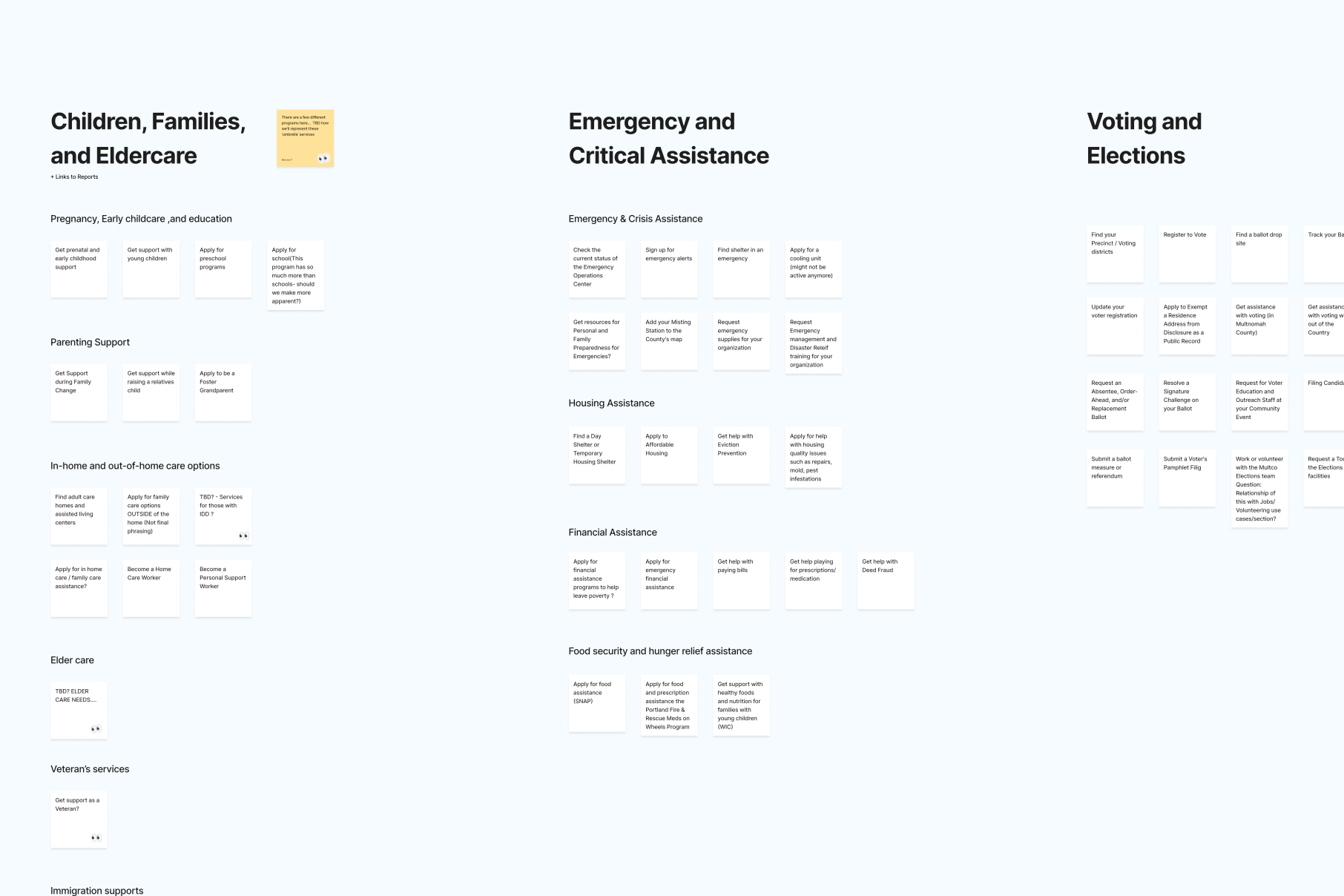
Independently conducted a full audit of 10,000+ web pages, identifying roughly 200 distinct community-facing services
Synthesized community research, audit findings, and emerging AI trends into a multi-year digital transformation roadmap
Prototyped and validated new service templates alongside a cohort of County content editors
Advised digital and IT leadership on content and product strategy, including how to structure services for an AI-mediated future
Key InsightFor the people who need County services most, the website wasn't the answer. Their neighbor was.
For many of the community members who need County services most, the website isn't where they go for help. They turn to people they already trust: a friend, a neighbor, a caseworker at a community organization who knows how to navigate the system on their behalf. The site isn't just hard to use. For a significant portion of the community, it has already been written off.
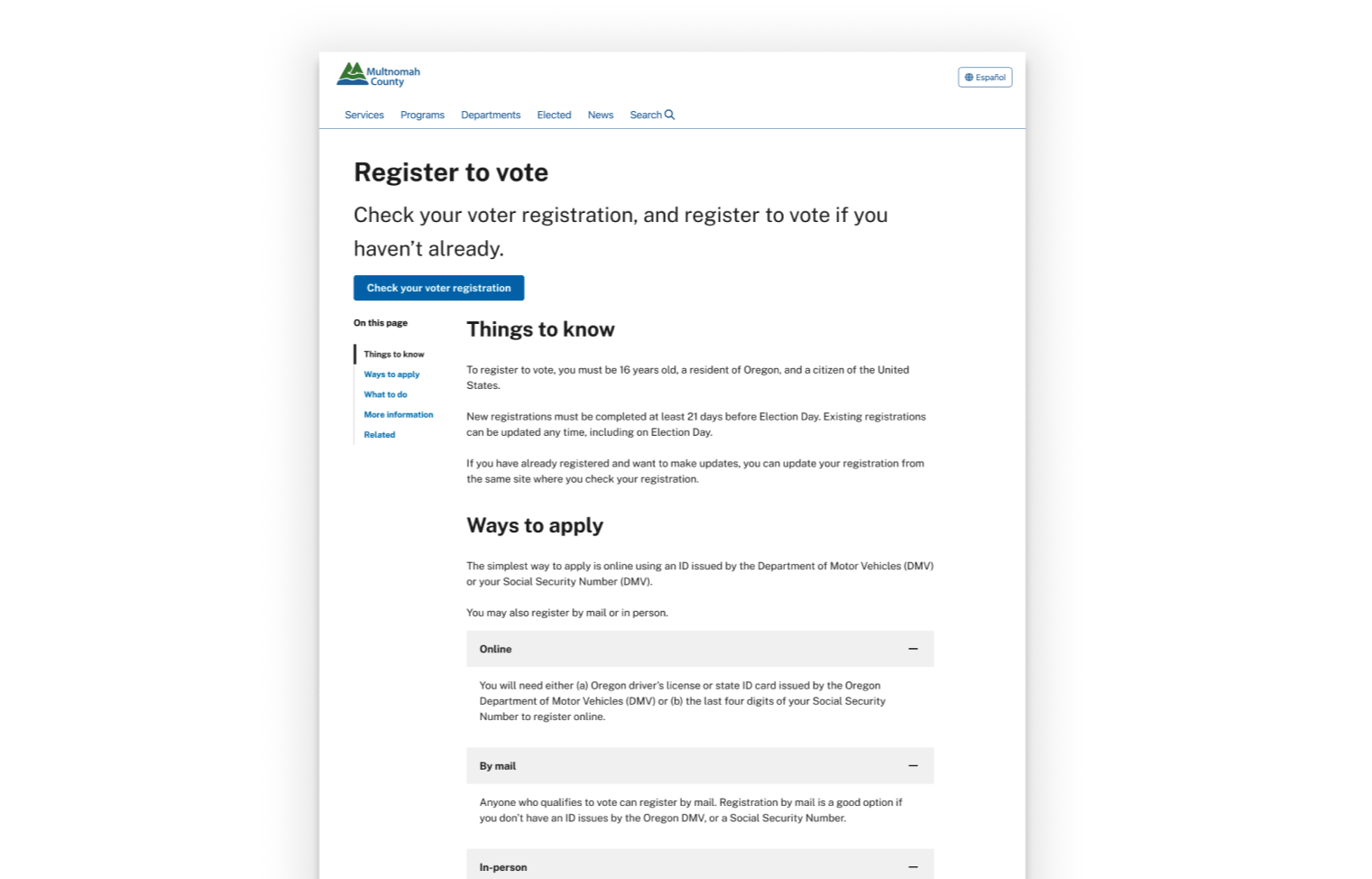
That reframe changed what improving the website actually meant. It meant focusing on consistency, ease of use, and clarity above all else: service pages that are scannable and written the same way across departments, front doors that don't require someone to already understand how the County is organized, and an experience that works whether you're applying yourself or helping someone else do it.
From departments to services
Before we could recommend anything, we needed to understand what we were actually working with. A full audit of the County's 10,000+ page site revealed both the scale of the problem and a path forward. Beneath the departmental structure, we identified roughly 200 distinct services that community members actually rely on. That number became the foundation for a different kind of conversation with County leadership: not about redesigning a website, but about reorienting an entire digital presence around what people need to accomplish, not around how the organization happens to be structured internally.
Making services findable
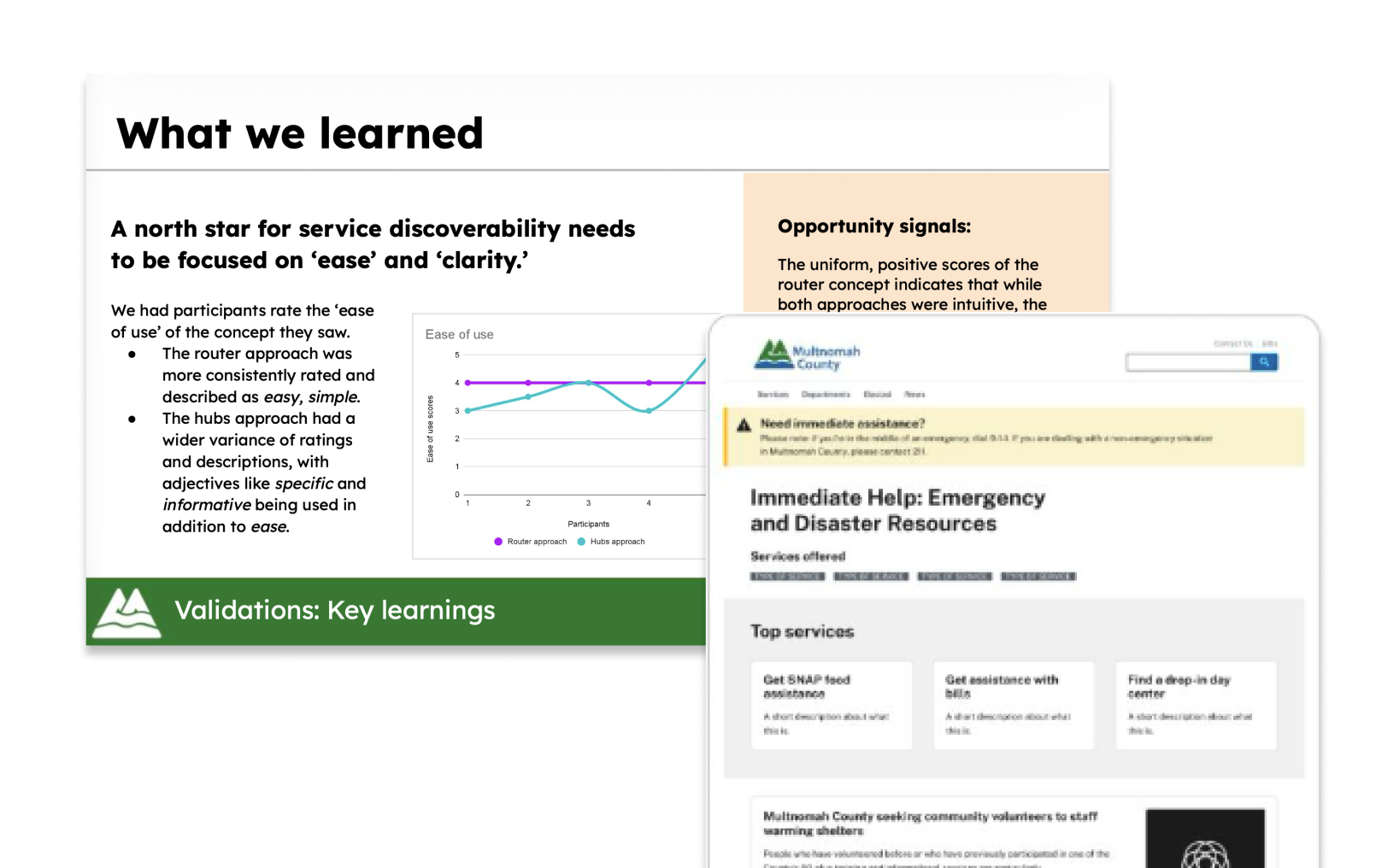
Knowing what the services were was only half the problem. We also needed to figure out how people would actually find them. We ran lightweight research testing two navigation models: a traditional category-based router and a more curated hub approach built around life events. Both worked reasonably well, but what we learned in the process was more useful than either concept. Language mattered more than structure. People search based on their own experience and vocabulary, not ours. Someone looking for emergency shelter might type "crisis" or might type "housing," and the site needed to meet them either way. That finding pushed us toward a tag-based architecture where a single service can surface across multiple categories, and where the underlying content structure is also readable by AI-driven search tools, not just humans navigating menus.
Designing for the people helping people
One of the more grounding shifts that came out of the research was reconsidering who the site needs to work for in practice. Community members navigating County services often aren't doing it alone. Caseworkers and staff at community-based organizations are frequently the ones finding information, explaining eligibility, and helping people take action. Designing for that reality meant that consistency and plain language weren't just nice to have. Service pages needed to be scannable and written the same way across departments, so that anyone, whether they were applying themselves or helping someone else apply, could get what they needed quickly and with confidence.
Catching up and getting ahead
Improving the County's digital presence wasn't only about fixing what was broken today. Generative AI is already changing how people find and interact with information, and that shift has real implications for public services. We built AI readiness into the recommendations from the start: structuring content in modular, machine-readable formats, planning for search experiences that understand intent rather than just keywords, and imagining how services might eventually be delivered through agents rather than web pages. The goal was to leave the County with a direction that holds up as the landscape continues to shift, not just a plan for the moment the contract ended.